

From 27 to 28 July, the International Institute for Justice and the Rule of Law (IIJ), through its Counter-Terrorism Platform for Human Rights Engagement (CT PHARE) with generous funding from the European Union, convened a two-day awareness-raising activity on Strengthening National Human Rights Institutions (NHRIs) Engagement in Counter-Terrorism Oversight across Africa. Held in Nairobi, Kenya, in collaboration with the Network of African National Human Rights Institutions (NANHRI) and Article 19, the activity focused on the practical operationalisation of the Global Counterterrorism Forum's (GCTF) Brussels Memorandum on Good Practices for Oversight and Accountability Mechanisms in Counterterrorism Operations within the African context, with particular attention to NHRI oversight mandates.
The opening session featured remarks from Mr. Ondrej Simek, Deputy Head of Delegation and Deputy Ambassador of the European Union to Kenya; Mr. Paul Madden, CT PHARE Project Lead, IIJ; Mr. Gilbert Sebihogo, Executive Director of NANHRI; and Ms. Catherine Mbui, Civic Space Advocate, Article 19 Eastern Africa Office. Across their remarks, the speakers converged on a shared message: independent oversight is central, not incidental to effective security cooperation.
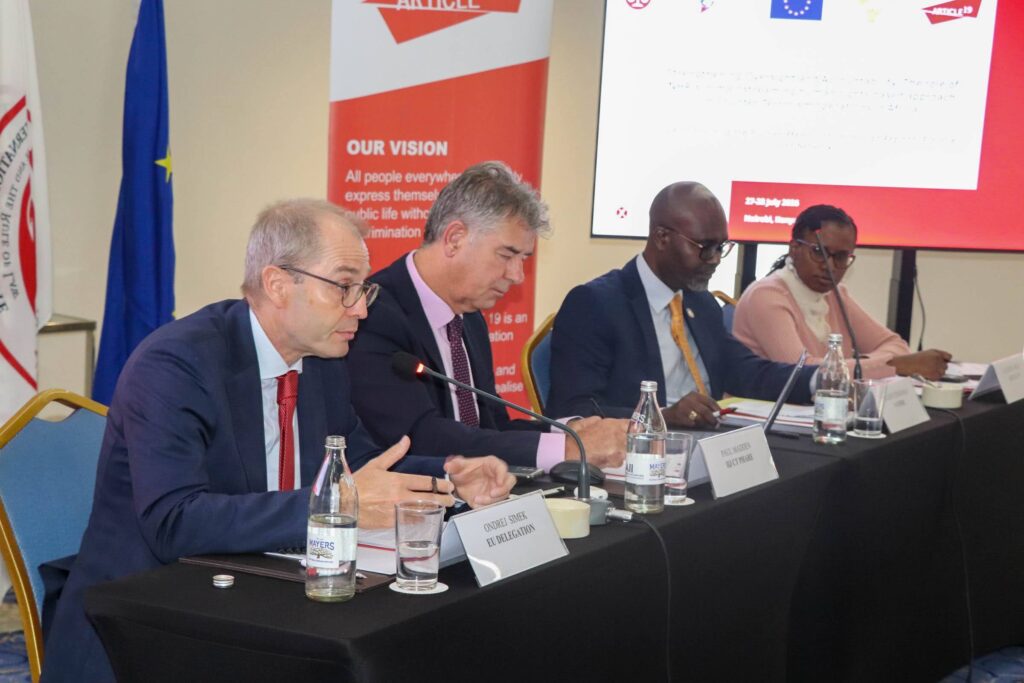
Mr. Simek stressed this point on behalf of the European Union, framing the activity's purpose as helping participants translate the GCTF Brussels Memorandum's good practices into tools suited to their national contexts. He acknowledged the real constraints NHRIs face in this work, including broad invocations of national security used to block access to files and facilities, surveillance technology advancing faster than institutions' capacity to audit it, and persistent tensions between civilian oversight bodies and military and security actors.
Mr. Sebihogo built on this from NANHRI's perspective, outlining four strategic pillars for NHRI engagement in counter-terrorism oversight. The first is comprehensive monitoring and independent detention oversight, requiring proactive access to high-security facilities to ensure due process and prevent torture. The second is rigorous legislative review, to align national security laws with the African Charter on Human and Peoples' Rights and prevent overly broad definitions of terrorism from being used against dissent. The third is protection of civic space, through auditing digital surveillance tactics and internet shutdowns that target journalists and human rights defenders. The fourth is promoting a human rights-based approach within the security sector itself, by engaging with the military and police to embed human rights into their operational doctrine and rules of engagement. Alongside these pillars, he flagged persistent barriers, including the "national security shield" used to block access to case files and facilities, and a technical deficit within NHRIs in auditing modern security tactics such as encrypted communications.
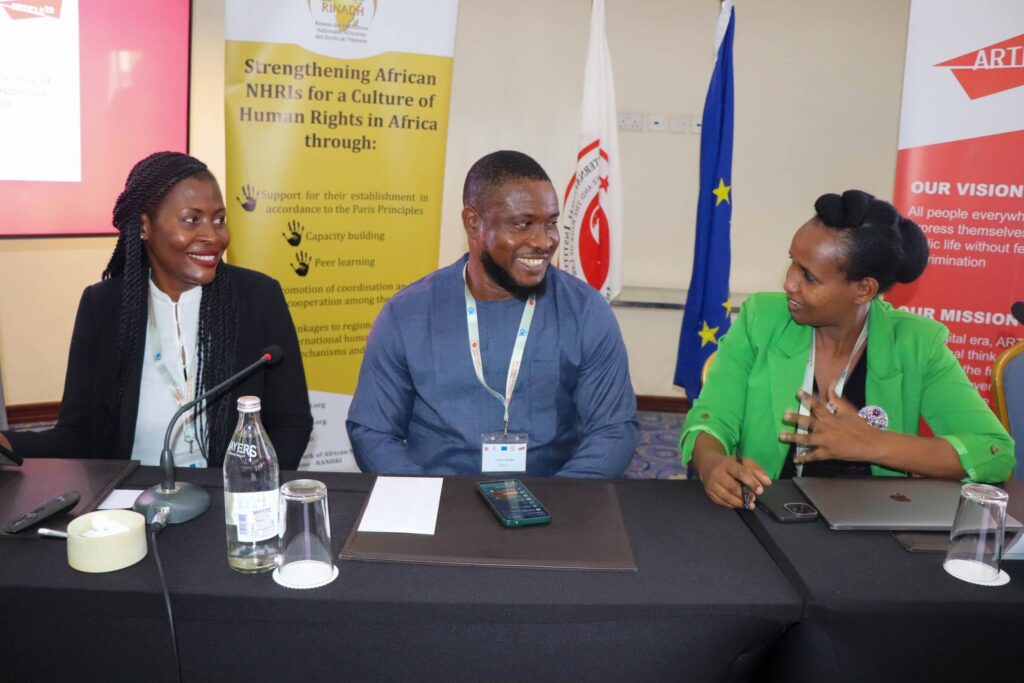
Closing the session, Ms. Mbui of Article 19 called for a people-centred approach to security: "We cannot securitise our way out of the mistrust that citizens feel and experience on a daily basis. The safety and security conversations need all of us at the table. Nothing for us, without us."
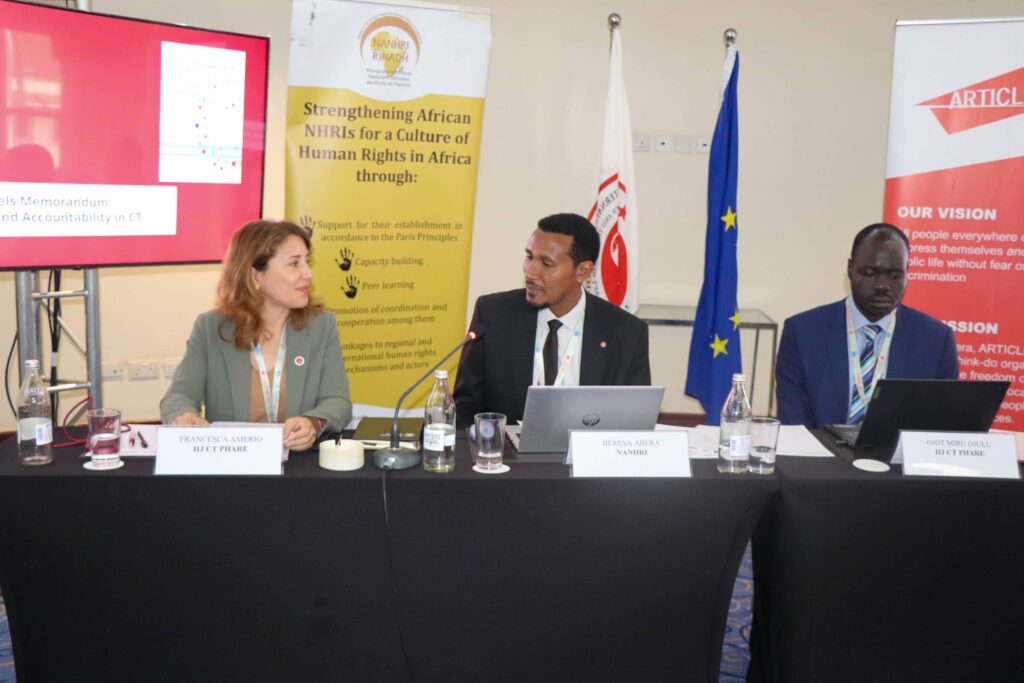
Through country presentations, breakout discussions, and peer exchange, participants from NHRIs in Cameroon, Ethiopia, Ghana, Kenya, Malawi, Nigeria, Rwanda, South Sudan, Tanzania, Uganda, and Zambia came together to strengthen oversight of counter-terrorism measures and lay the groundwork for a sustained regional peer-learning network among NHRI Commissioners. Day one examined NHRIs' own oversight role under the GCTF Brussels Memorandum and its alignment with African Union (AU) human rights standards, including the African Charter on Human and Peoples' Rights and the AU Principles and Guidelines while Countering Terrorism. Day two turned to civil society's complementary role: reaching communities, documenting abuses, and sustaining pressure for accountability in ways formal institutions cannot always achieve alone. Mr. Ojot Miru Ojulu, IIJ CT PHARE Chair of the GCTF Brussels Memorandum’s NHRIs Working Group, and Ms. Lily Mburu, IIJ CT PHARE Penholder of the GCTF Brussels Memorandum lead some of the discussions.
Closing the activity, CT PHARE Project Lead Mr. Madden reflected on how the two days had moved participants from raising awareness of the GCTF Brussels Memorandum's good practices to a shared understanding of what independent and effective oversight looks like in practice, grounded in the lived experience of NHRIs across the continent. He noted that the country presentations and breakout discussions had surfaced common challenges – from resourcing and access to detention facilities and classified information, to the need for stronger follow-up on recommendations – alongside concrete good practices already in use in participants' respective countries.
As a next step, building on discussions already underway with NANHRI, the IIJ proposed developing a practical toolkit to support NHRIs in implementing these good practices at the national level, drawing directly on the experiences shared during the activity. Through continued engagement with national, regional, and international partners, the IIJ CT PHARE Team remains committed to supporting effective cooperation and practical solutions that strengthen justice systems and enhance responses to terrorism-related threats.