

From 9 to 19 February 2026, the International Institute for Justice and the Rule of Law (IIJ) organised in Yaoundé, Cameroon, the in-person component of the fourth edition of the programme “Counter-Terrorism Academic Curriculum – Trial Judges” (CTAC Trial Judges), dedicated to French-speaking practitioners from West Africa, Central Africa, and the Sahel, following the preceding online phase.
This in-person component was preceded by a demanding and intensive five-week online course, held from 12 November to 12 December 2025, which concluded with the selection of participants.
This high-level program was made possible through the support of the Crisis and Support Centre (CDCS) of the French Ministry for Europe and Foreign Affairs. It brought together 24 trial judges currently in office from Benin, Cameroon, Côte d’Ivoire, Guinea, Senegal, Chad, Togo, and the Democratic Republic of the Congo. As presidents of courts, judges at courts of appeal, and members of specialized panels, these practitioners hold leading responsibilities in the adjudication of terrorism cases within their respective jurisdictions.
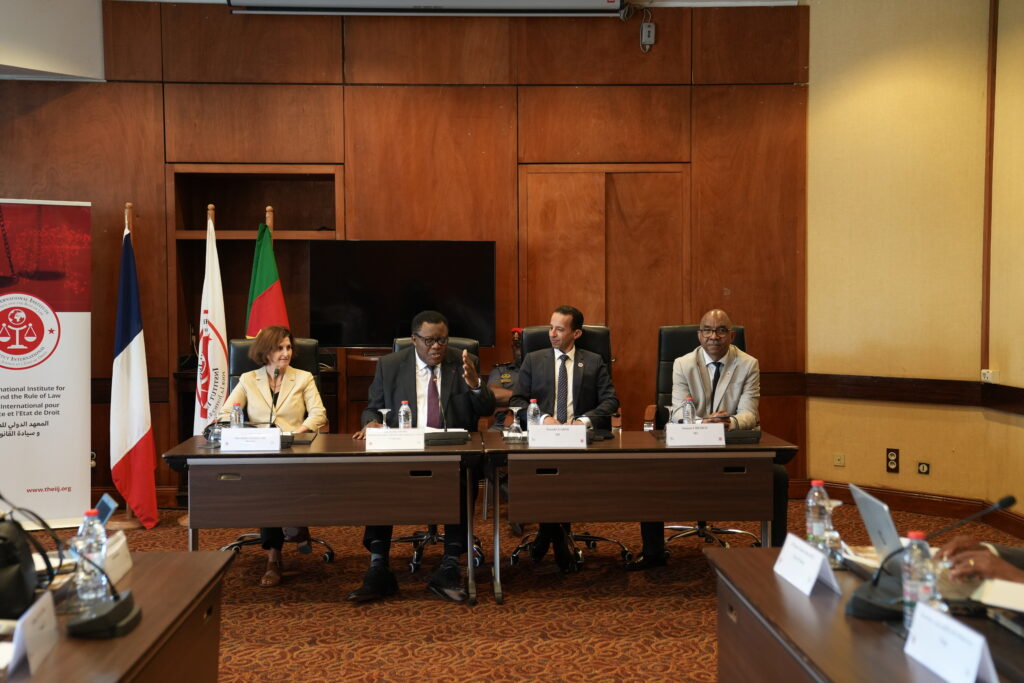
The opening ceremony was held in the presence of Cameroonian judicial authorities and representatives of French cooperation. The addresses were delivered successively by Mr. Naoufel Gaeid, Director of the IIJ Academic Unit, alongside Colonel Florian Villalonga, Internal Security Attaché at the French Embassy in Cameroon, and Mrs. FEH Helen KWANGA épouse GALEGA, Secretary General of the Ministry of Justice of Cameroon. All speakers emphasized the need to continuously strengthen the technical and decision-making capacities of trial judges called upon to adjudicate complex terrorism cases, while strictly safeguarding the rights of the defense, the dignity of victims, and fair trial standards.
Designed, structured, and delivered by the IIJ Academic Unit, the CTAC Trial Judges program is based on a progressive and demanding pedagogical framework centered on the role of the trial judge in terrorism proceedings. Its objective is to enable judges to organize and conduct fair trials within a reasonable timeframe; to master the identification of the constituent elements of terrorism offenses; to assess the procedural regularity of investigative acts and the admissibility of evidence; to deliberate in full independence; and to draft fully reasoned decisions, including with respect to principal sentences and ancillary measures.
The initial days were devoted to a contextualized analysis of the terrorist threat in the Sahel, the Gulf of Guinea, and Central Africa, through national presentations structured by geographic area. Participants outlined developments specific to their respective countries—the evolution of armed groups, financing mechanisms, challenges of judicial cooperation, and security constraints—allowing for a comparative analysis of legal and institutional frameworks. These exchanges highlighted the operational and legal challenges facing national systems, while strengthening mutual understanding and sub-regional coordination reflexes.
An in-depth session focused on judicial oversight of procedural regularity and the reconciliation of national security imperatives with procedural safeguards. These discussions formed a direct continuation of the group work conducted during the online component. Through practical exercises, the judges analyzed the validity of investigative acts, the admissibility of evidence gathered, witness protection measures, and the preservation of defense rights in sensitive contexts.
The programme consisted of a series of simulated hearings covering key counter-terrorism themes: international judicial cooperation and extradition; the admissibility of indicia and evidence collected within the framework of protocols establishing joint investigation teams; terrorist financing and corporate criminal liability; the determination of guilt and the individualisation of sentences; as well as the rehabilitation and reintegration of persons associated with terrorist groups.
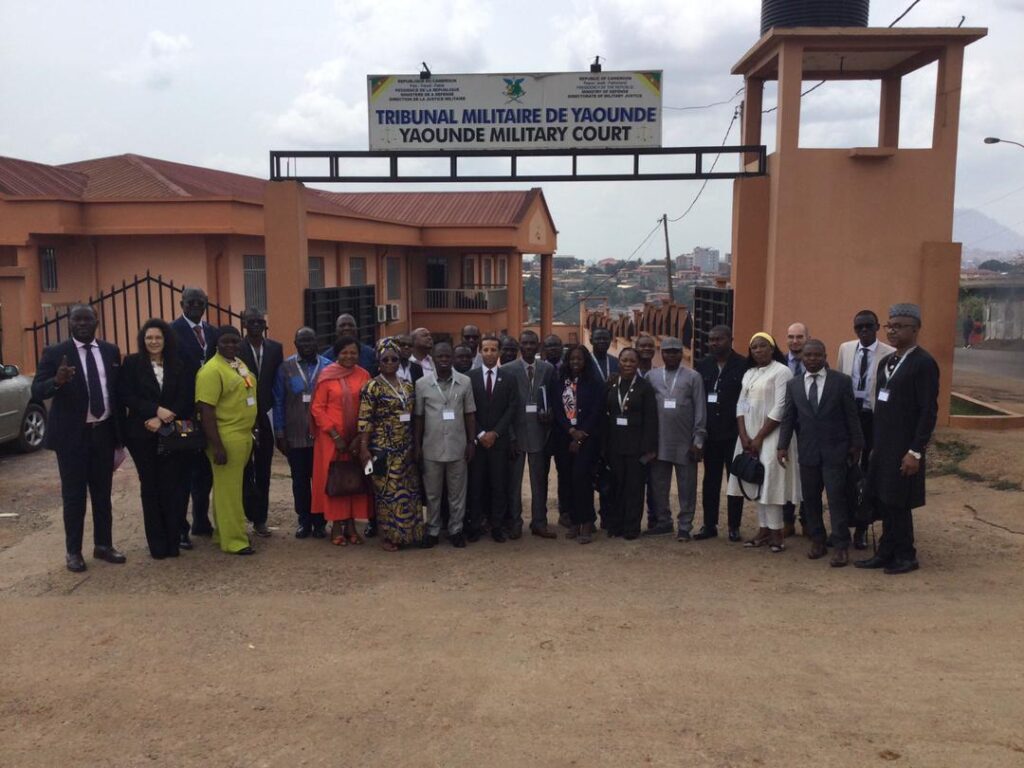
Participants successively assumed the roles of presiding judge, panel member, prosecutor, and defence counsel, thereby putting into practice courtroom management, adversarial examination of evidence, the structuring of legal reasoning, and the drafting of reasoned decisions. The deliberation sessions enabled in-depth critical reflection on the proportionality of criminal sanctions, the consistency of legal classifications adopted, and the legal robustness of the decisions rendered. A visit to the Military Tribunal of Yaoundé, which has jurisdiction over terrorism matters, provided concrete insight into Cameroon’s institutional organization and judicial practice.
The strong interest shown by the Cameroonian authorities was notably demonstrated by the visit of the Director of the National School of Administration and Magistracy (ENAM), responsible for the training of judges and court registrars, as well as the Director of Training within the Ministry of Justice, who attended several working sessions. The supporting experts—Mr. Seidik Abba, Mr. Jean-Louis Périès, and Ms. Hélène Cissé—provided specialized input reinforcing the pedagogical objectives defined by the Academic Unit.
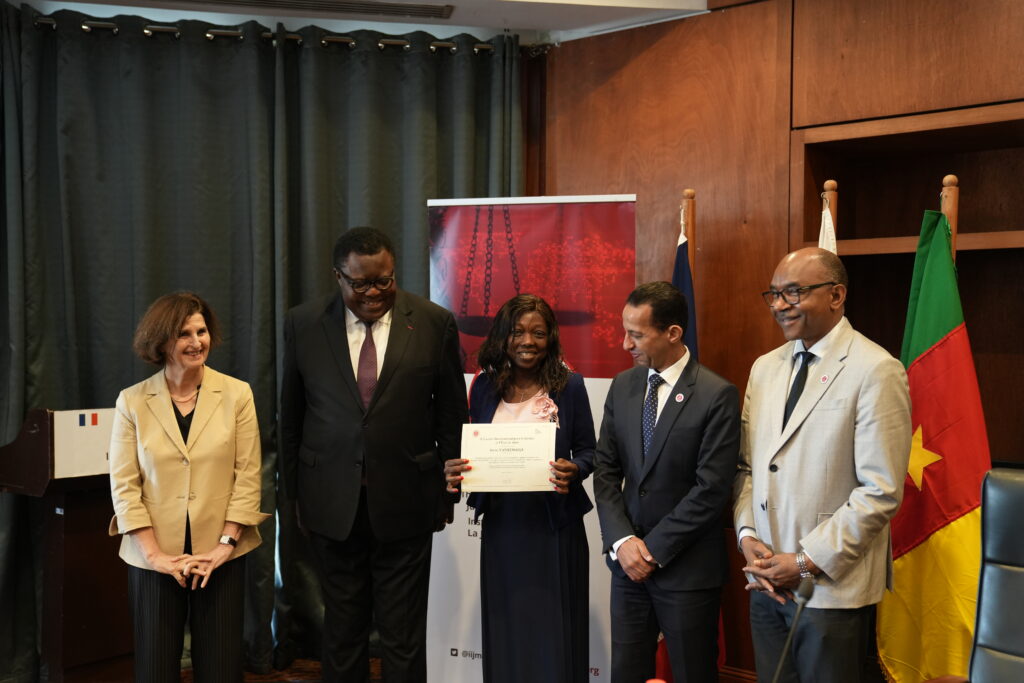
The closing ceremony, held on 19 February 2026, began with remarks by Mr Naoufel Gaeid, Director of the IIJ Academic Unit, who praised the commitment, rigour and excellence demonstrated by the judges throughout the two intensive weeks. He recalled that the training, firmly oriented towards operational practice, aimed to equip judges with concrete tools directly applicable to the day-to-day handling of terrorism cases.
Ms Delattre, First Counsellor at the French Embassy in Cameroon, then spoke in the presence of Colonel Florian Villalonga, Internal Security Attaché, and Ms Anaëlle Roucou, Cooperation Attaché, emphasising the strategic importance of this type of training for the sustainable strengthening of regional security and the consolidation of the rule of law in the face of transnational threats. Finally, the Minister Delegate to the Minister of Justice, Keeper of the Seals, Mr. Jean de Dieu Momo, delivered the closing address, underscoring the strategic importance of this initiative for strengthening the judicial response to terrorism and the excellence of the program implemented by the IIJ. He also expressed his deep gratitude to the French Republic for its steadfast support to Cameroon in the field of counter-terrorism.
The IIJ fully aligns itself with the remarks of the Minister Delegate in expressing its appreciation to France for its continued commitment and decisive support, and reaffirms its determination to pursue, alongside its partners, the sustainable strengthening of judicial capacities in response to the challenges posed by terrorism.