
About EU PRR
The IIJ is partnering with the governments of Tajikistan and Uzbekistan to advance a comprehensive approach to the Prosecution, Rehabilitation and Reintegration (PRR) of individuals returning from Iraq and Northeast Syria.
This three-year project (2025-2028), funded by the European Union’s Foreign Policy Instrument (FPI), is co-implemented in consortium with the Global Community Engagement and Resilience Fund (GCERF), and the International Centre of Excellence for Countering Extremism and Violent Extremism (Hedayah).
Since 2012, more than 4,000 people from Central Asia are believed to have joined the Islamic State of Iraq and Syria (ISIS) and affiliated terrorist groups, making the region the third-largest source of foreign terrorist fighters (FTFs) globally. In Tajikistan and Uzbekistan, where significant numbers of nationals travelled to conflict zones, there is an urgent need for coordinated national strategies that address security risks while upholding human rights and supporting rehabilitation and social reintegration efforts.
In this context, the project will support Tajikistan and Uzbekistan in developing a sustainable, coordinated whole-of-government framework for the PRR of returnees from Iraq and Northeast Syria, thereby enhancing regional stability and social cohesion. It will provide targeted assistance while fostering operational collaboration among criminal justice institutions, frontline rehabilitation practitioners, and community-based reintegration initiatives.
Within this framework, the IIJ’s intervention aims to strengthen criminal justice systems in investigating, prosecuting and managing complex terrorism cases, including those involving FTFs and individuals returning from conflict zones, in line with international standards and human rights obligations. Specifically, the IIJ’s approach is organised around four interconnected workstreams:
Workstream 1 – Strengthening Institutional Frameworks for Differentiated PRR Responses:
Building national readiness and enhancing the capacity of justice actors to develop and apply standardised procedures, assessment criteria, and referral pathways for returnee-related investigations and prosecutions, ensuring evidence-based, rights-compliant, and coherent decision-making across the PRR chain.
Workstream 2 – Capacity-Strengthening for Criminal Justice Practitioners
Equipping criminal justice practitioners with enhanced technical skills, tools, and coordinated approaches to conduct effective, rights-based prosecutions and strengthen the credibility of investigative and prosecutorial practices.
Workstream 3 – Enhancing Coordination Between Justice, Security, and Social Sector Actors for PRR:
Strengthening operational collaboration, information-sharing practices, and joint case management between agencies involved in the PRR of returnees, including law enforcement, judicial, and social service actors.
Workstream 4 – Legislative and Procedural Support:
Supporting criminal justice practitioners and policymakers in applying updated, rights-compliant legal frameworks that address legislative gaps, enable fair prosecution, and improve cross-border co-operation.
“The most useful element of the dialogue was the direct operational exchange between senior Tajik practitioners and counterparts from partner jurisdictions and international organisations. The bilateral discussions enabled participants to identify practical cooperation opportunities, clarify procedures for mutual legal assistance and information exchange, and establish direct professional contacts that will facilitate future operational cooperation.”
Participant in the Operational Dialogue held by the IIJ in Dushanbe, Tajikistan, in July 2026
Key Events

Strengthening International Judicial Cooperation Through Operational Dialogue in Tajikistan
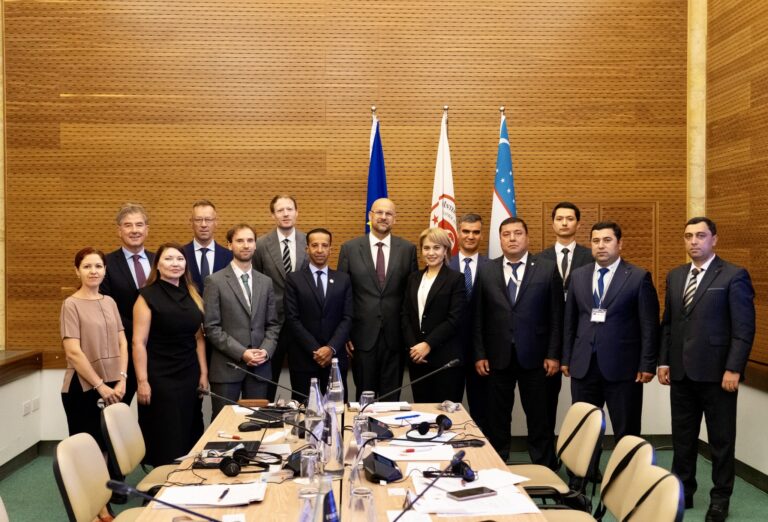
The IIJ Welcomed an Official Delegation from the Republic of Uzbekistan