

On 14 and 15 May 2026, the International Institute for Justice and the Rule of Law (IIJ), with the support of the Kingdom of Denmark, organised at the University of Malta, a day-long event to present the findings of applied research on counter-terrorism justice in West and Central Africa, conducted by eight practitioners, magistrates and investigators from Cameroon, Togo, Senegal, the Democratic Republic of the Congo and the Central African Republic. Organised as part of the IIJ’s Counter-Terrorism Academic Curriculum (CTAC), this feedback session was attended by 368 participants from four continents, both online and in person, including judges, investigators, prosecutors, representatives of international and regional organisations, experts and academics, etc.
The discussions and interactions that followed demonstrate the relevance of the two topics covered:
- The role of the judiciary in the rehabilitation and reintegration of perpetrators of terrorist offences, in the context of West and Central Africa;
- Judicial cooperation in the face of transnational security threats within an unstable geopolitical context in West and Central Africa.
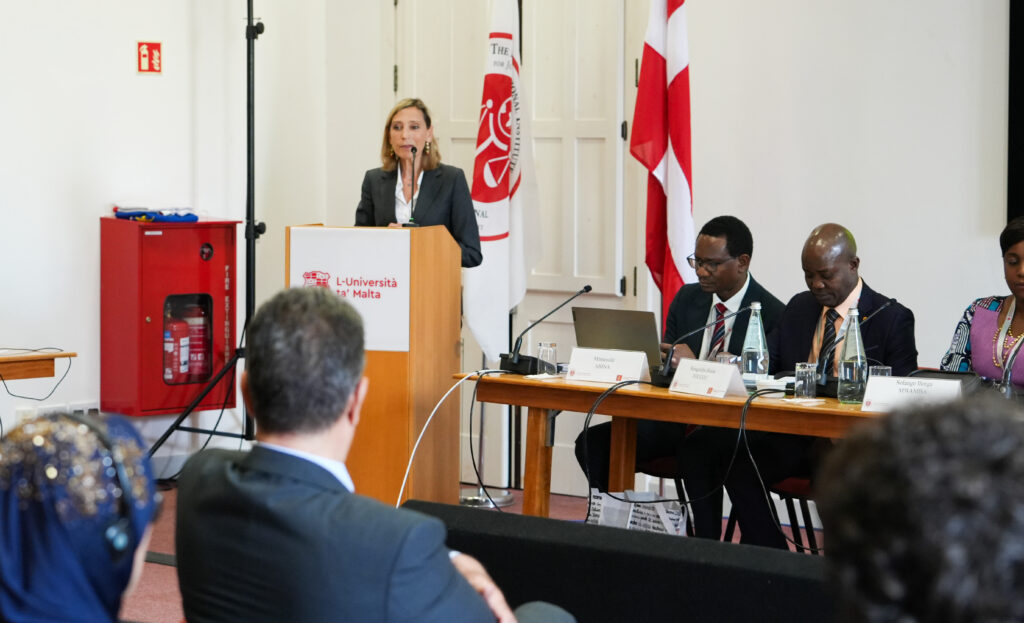
| On this occasion, the IIJ had the honour of welcoming several high-level guests, including Her Excellency Ms Sandrine Lelong-Motta, French Ambassador to Malta; Mr Dorian Farrugia, First Secretary at the Maltese Ministry of Foreign Affairs and Tourism; Mr Ali Dabouz, Director of Counter-Terrorism at the General Secretariat of the League of Arab States; as well as diplomatic representatives from several partner states such as Tunisia and Egypt. In his welcoming remarks on behalf of the entire Academic Unit team, Mr Cheibou Samna noted that these two research reports are the result of a collaborative effort by practitioners from different countries and legal systems who have identified common challenges faced on a daily basis by judicial actors in the two target geographical areas. |
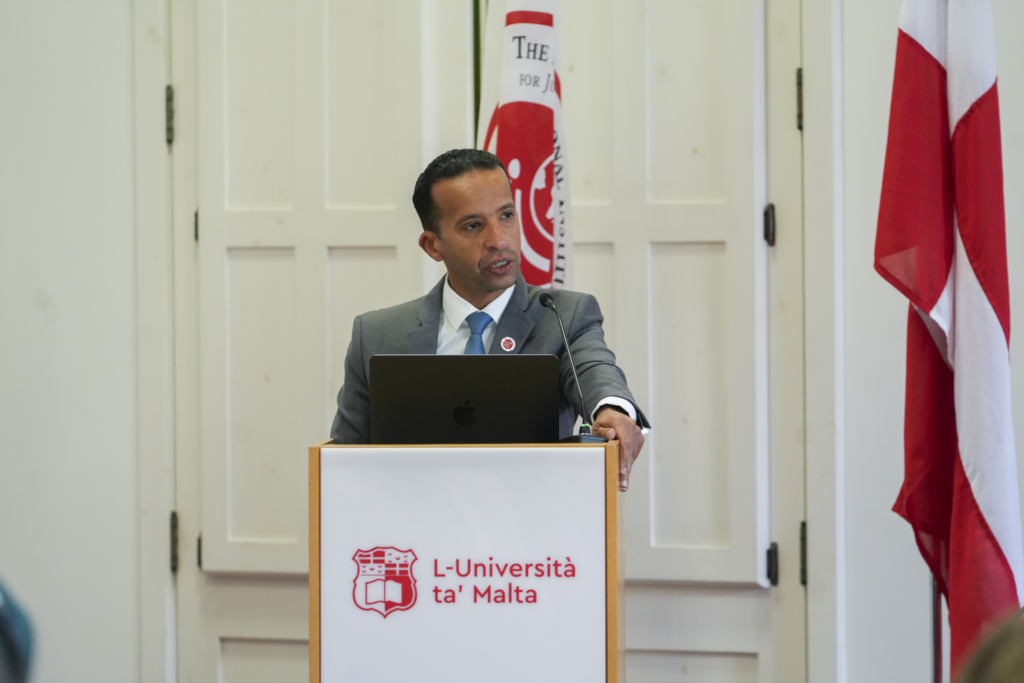
In his opening address, the Executive Secretary of the IIJ, Mr Naoufel Gaied, emphasised that the epicentre of the terrorist threat now lies in this region and praised the importance and relevance of this applied research in meeting the practical needs of criminal justice practitioners faced with increasingly complex terrorism cases. He also noted that the papers presented had been drafted directly by African practitioners, and that the resulting recommendations are rooted in the operational realities on the ground.
The work presented at the final presentation day will be published among the IIJ’s networks of practitioners and institutional partners, as well as on the international platforms with which the IIJ is associated.