


From 2 to 6 November 2026, the Academic Unit of the International Institute for Justice and the Rule of Law (IIJ) delivered the in-person component of the fifth edition of the Counter-Terrorism Academic Curriculum for Trial Judges (Trial Judges CTAC) in Malta, dedicated to francophone practitioners from West and Central Africa. This week of training built on the online component, which ran from 18 August to 18 September 2026.
Made possible with the support of the Federal Republic of Germany, this advanced training programme brought together 24 trial judges from Benin, Cameroon, Côte d’Ivoire, Mauritania, the Central African Republic, the Democratic Republic of the Congo, Senegal, Chad and Togo. Court presidents, appellate judges and judges serving in specialised chambers shared and compared their experiences of adjudicating terrorism cases in their respective jurisdictions.
At the opening ceremony, Mr Samna Cheibou, Director of the IIJ Academic Unit, welcomed the participants. Ms Gabrielle Caligari Conti, Deputy Director for Transnational Threats and Sanctions at Malta’s Ministry for Foreign Affairs, and Her Excellency Ms Tanja I. Beyer, Ambassador of Germany to Malta, addressed the participants before Mr Naoufel Gaied, IIJ Executive Secretary, formally opened the programme. The speakers emphasised the role of judges in ensuring fair trials in terrorism cases, as well as the importance of Germany’s support and Malta’s contribution as host country. On the morning of Tuesday, 3 November, Ms Simone Stemmler, Germany’s representative on the IIJ Governing Board of Administrators, also addressed the participants.
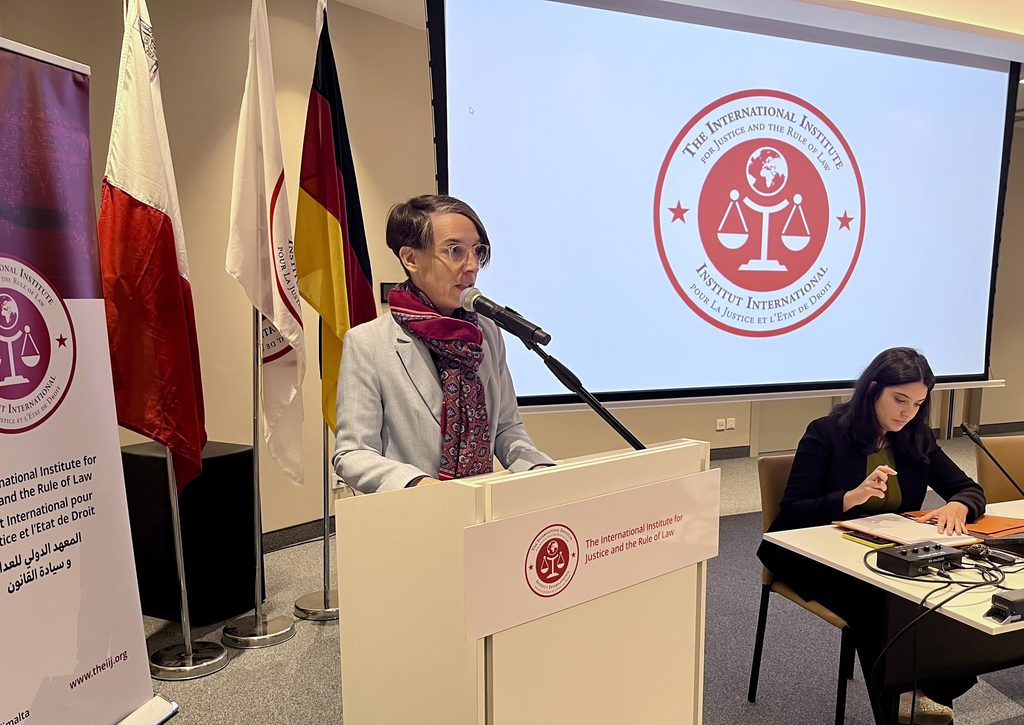
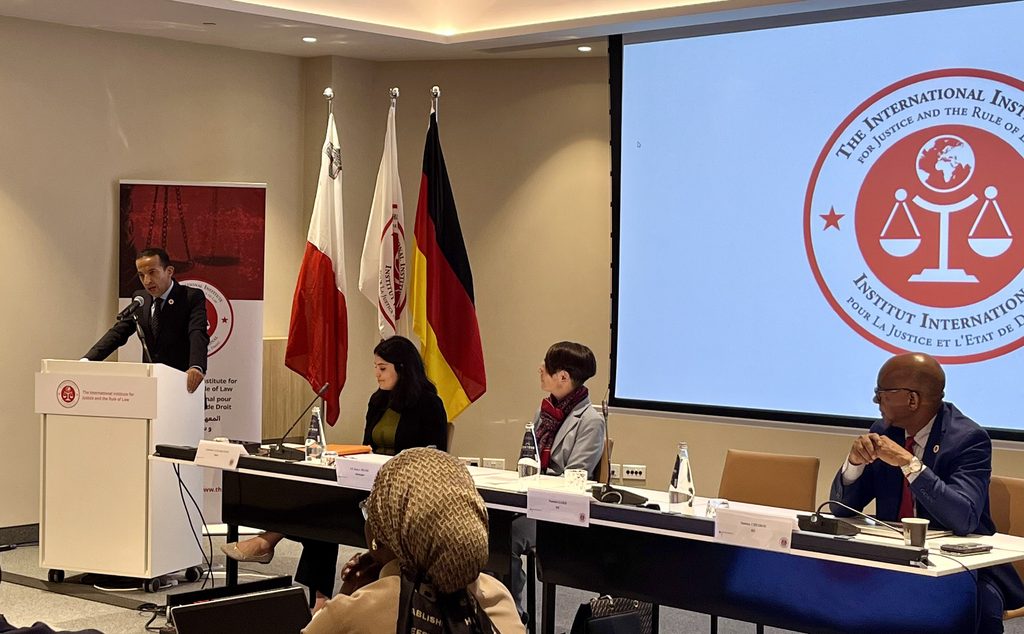
Developed by the IIJ Academic Unit’s experienced practitioners, the programme aims to strengthen judges’ ability to conduct complex proceedings within a reasonable time, assess the lawfulness of investigative measures and evaluate the evidence before them, deliberate independently and give reasons for their decisions. The online component had prepared participants for this work through learning materials and interactive sessions. In Malta, they applied what they had learned to a fictional case file that served as the common thread throughout the simulated hearings.
The opening sessions examined the terrorist threat in the Sahel, the Gulf of Guinea and Central Africa. In panels organised by geographical region, delegations presented developments in their respective countries and the challenges these posed for their courts. These exchanges allowed participants to compare national contexts and examine shared challenges in judicial cooperation. A session on the social dimensions of terrorism also explored the role of communities. Sessions on judicial independence, delivered with the support of the French National School for the Judiciary (École nationale de la magistrature, ENM), and on the deliberation process then prepared the judges for the practical exercises.
Five simulated hearings formed the core of the week. The first two focused on judicial review of special investigative techniques in light of procedural safeguards and defence rights, followed by the identification of the constituent elements of terrorist offences. The subsequent hearings addressed the identification and confiscation of assets, international judicial cooperation and extradition, victims’ access to justice and witness protection. The final hearing examined the role of judges in the rehabilitation and reintegration of individuals associated with terrorist groups.
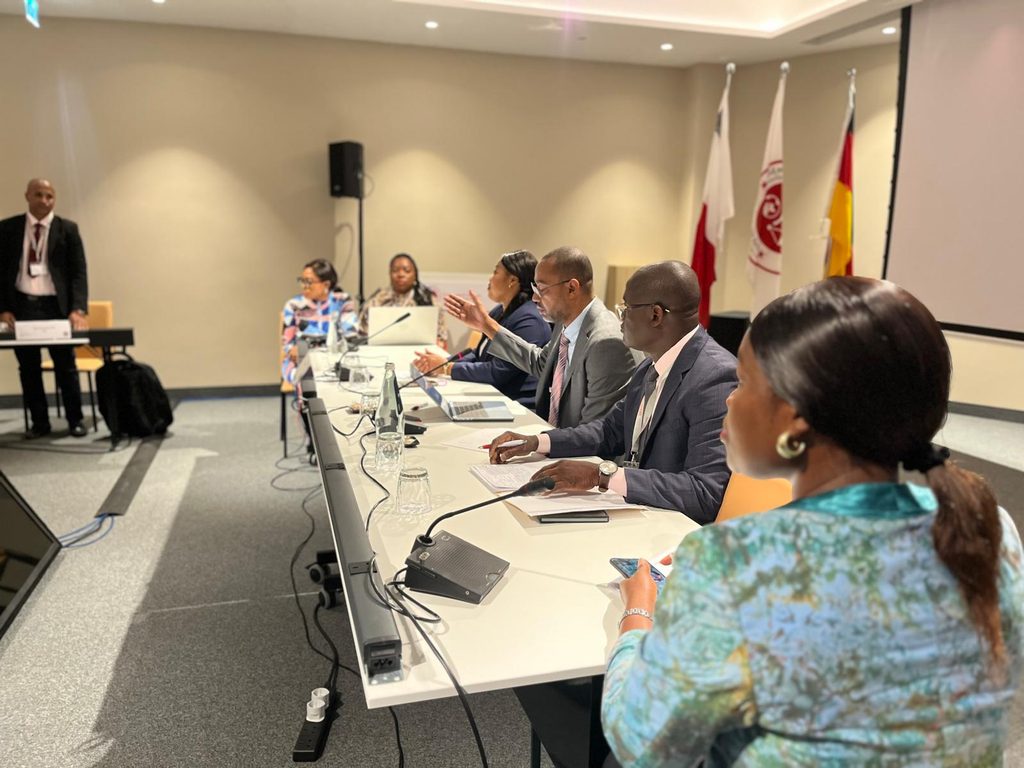
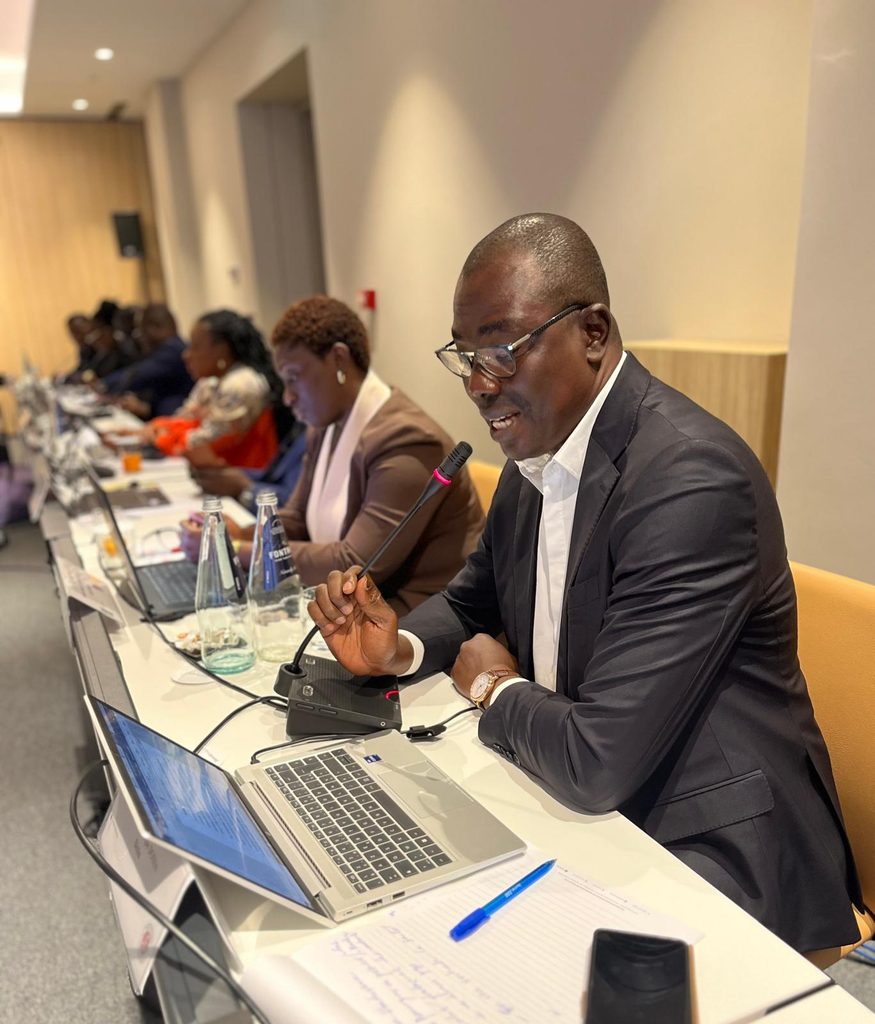
Taking turns as presiding judges, panel members, prosecutors and defence counsel, the judges practised conducting hearings, examining evidence in adversarial proceedings and giving reasons for their decisions. Deliberations and group debriefings allowed them to discuss the soundness of their legal reasoning, the consistency of the legal classifications adopted and how to reconcile security requirements with fair trial safeguards. A visit to the IIJ also gave the judges an opportunity to see the Institute’s premises and continue their exchanges with the team.
At the closing ceremony on 6 November, the delegations praised the excellence of the training and highlighted the sustained commitment required to complete the exercises and meet the programme’s standards. Participants committed to applying what they had learned upon returning to their courts. They also expressed their intention to draw on exchanges between delegations to consider reforms that could improve the adjudication of terrorism cases and complex offences in their countries. In his closing remarks, Naoufel Gaied, IIJ Executive Secretary, commended the judges for their daily commitment to countering terrorism on the ground. He emphasised that, as CTAC practitioners, they were now part of a cohesive and operational community on which they could draw to continue sharing experiences and strengthen judicial cooperation. Twenty-three judges received their certificates.